In the evolving landscape of metabolic research, 5-AMINO-1MQ has emerged as a groundbreaking small molecule. While many compounds attempt to influence energy expenditure through systemic stimulation, 5-AMINO-1MQ targets a specific enzymatic bottleneck: Nicotinamide N-methyltransferase (NNMT).
By selectively inhibiting this enzyme, researchers are uncovering new pathways to reverse metabolic decline and enhance muscle function.
The Biological Target: Understanding NNMT
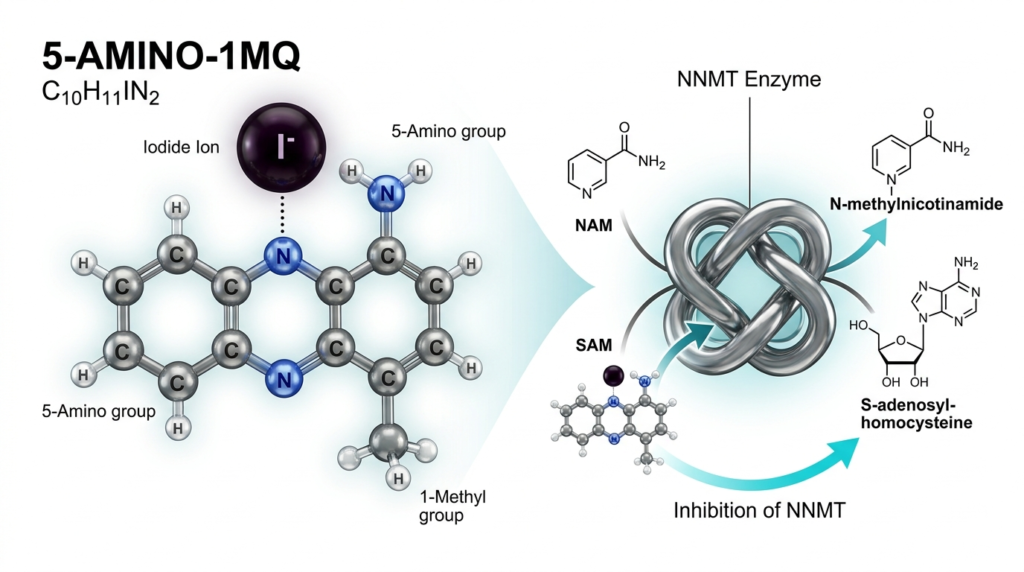
NNMT is a cytosolic enzyme primarily expressed in adipose (fat) and liver tissues. Its role is to catalyze the methylation of nicotinamide (NAM) using S-adenosyl-L-methionine (SAM) as the methyl donor.
High levels of NNMT are strongly correlated with metabolic disorders, obesity, and impaired muscle regeneration. When NNMT is overexpressed, it depletes the cell’s pool of NAD+ (Nicotinamide Adenine Dinucleotide), the critical coenzyme for cellular respiration and DNA repair.
5-AMINO-1MQ works by blocking this depletion, effectively “saving” NAD+ for more vital cellular functions.
Research Opportunity: For investigators focusing on metabolic signaling and adipose tissue remodeling, you can find research-grade 5-AMINO-1MQ here.
Advanced Metabolic Mechanisms
1. Intracellular NAD+ Augmentation
Unlike direct NAD+ precursors (like NMN or NR), 5-AMINO-1MQ increases NAD+ levels indirectly but powerfully. By inhibiting the NNMT-mediated degradation of NAM, the cell has more substrate available for the NAD+ salvage pathway. This leads to enhanced mitochondrial biogenesis and improved cellular energy homeostasis.
2. Adipose Tissue Remodeling
Research models suggest that NNMT inhibition via 5-AMINO-1MQ can shift the metabolic profile of white adipose tissue. It encourages “browning” of fat and increases basal metabolic rate without affecting the central nervous system or suppressing appetite, making it a unique tool for studying obesity.
3. Muscle Regeneration and Satellite Cell Activation
Beyond fat metabolism, 5-AMINO-1MQ is gaining traction in musculoskeletal research. Studies have shown that reducing NNMT activity helps activate satellite cells (muscle stem cells), leading to faster recovery from injury and potential reversal of age-related muscle wasting (sarcopenia).
Technical Specifications
To maintain experimental accuracy, ensure your 5-AMINO-1MQ meets these rigorous standards:
- Chemical Name: 1-methylquinolin-5-amine;iodide
- Molecular Formula: $C_{10}H_{11}IN_2$
- Mechanism: Membrane-permeable, selective, reversible NNMT inhibitor.
- Purity: ≥ 99% via HPLC/MS (Verify current batch data in our [Quality Control] portal).
Peer-Reviewed Scientific References
Explore the peer-reviewed evidence for 5-AMINO-1MQ:
- PubMed (Cell Reports): Small molecule NNMT inhibitor increases NAD+ and treats obesity
- PMC (Biochemical Pharmacology): Development of quinolinium-based NNMT inhibitors
- American Journal of Physiology: NNMT inhibition improves energy expenditure and glucose tolerance
Conclusion: A Precision Tool for Energy Research
5-AMINO-1MQ is more than just a metabolic aid; it is a precision tool that addresses the root enzymatic causes of energy depletion. By stabilizing the NAD+ pool and regulating methyl donor availability, it offers a novel approach to studying human longevity.
Next Steps:
- Secure your research supply: [Purchase 5-AMINO-1MQ].